All good things must come to an end, and, unfortunately,
after three amazing weeks at Castaway it was time to move on. As a tribute to
this fantastic experience I thought I’d paint a picture of a day in the life at
Castaway…
San Juan del Sur
As you may have gathered from the previous blog post,
Castaway was fairly secluded. About once a week we’d make the trek to San Juan
del Sur to stock-up on supplies, get some internet access and re-join civilization. After one
night in town, however, we’d be itching to get back to the paradise that is
Castaway.
Over the course of the three weeks I had developed a daily
routine: surf, fish, cook and, of course, save sea-turtles. The breaks around
Castaway were very tide-dependent, with high tide bringing the best waves. Spoiled
by the private break just steps from our front-door, the idea of a
fifteen-minute hike along the beach to Playa Maderas just to fight the crowds
over a wave was ludicrous. Accordingly, I tended to surf the former. When a big
swell rolled in, however, the trek to Maderas was worth it. The crowds would
thin-out as the waves grew well overhead, people would be getting barreled
left, right and centre and you would surely catch the ride of your life.
The private, front-door break
Tom paddling out to our front-door break
Surfing another nice left outside my front-door
The size of the swell on my final surf session at Playa Maderas
As the tide receded and the surf got worse, it was time to
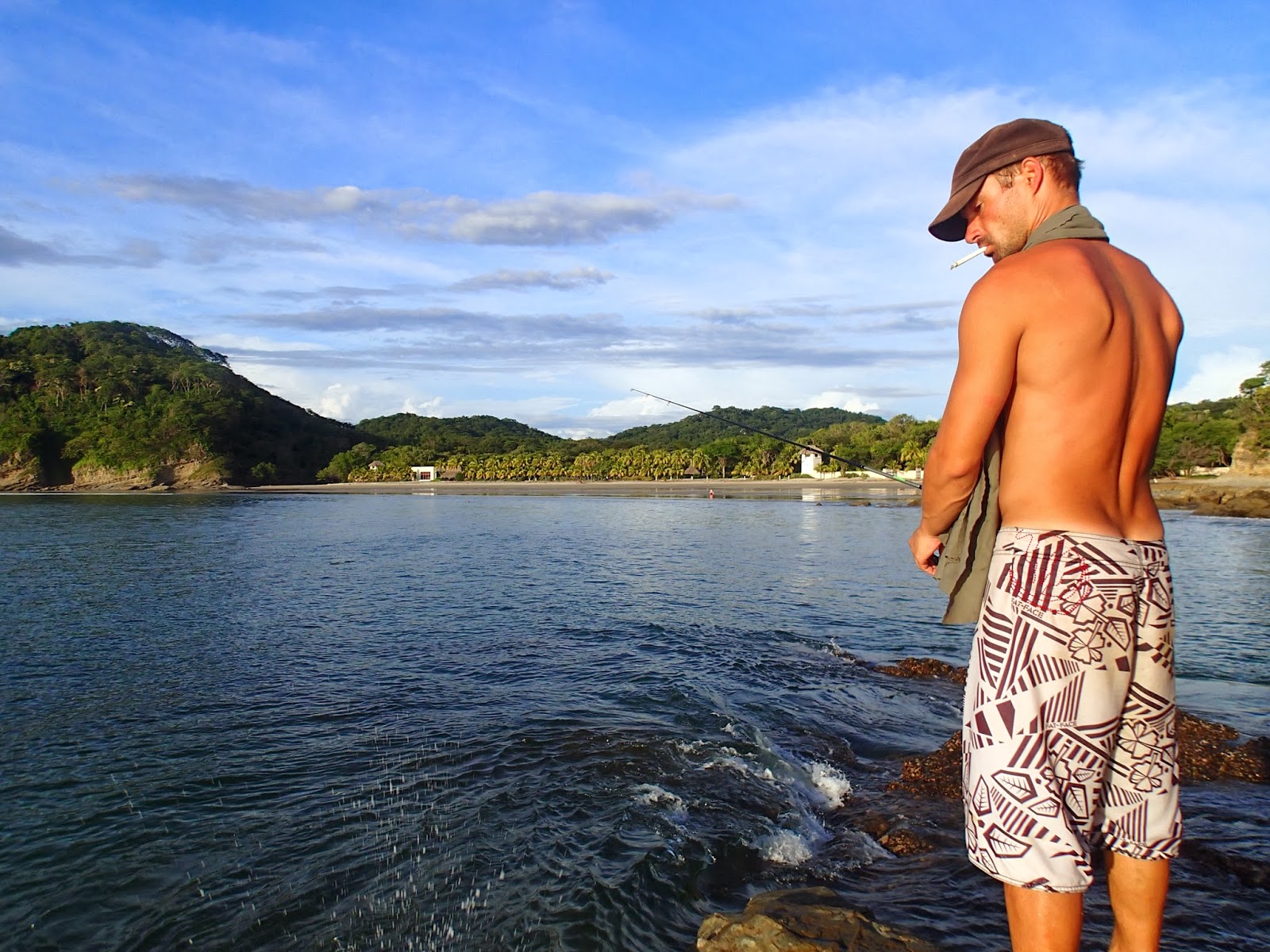
try to catch some supper. We’d equip ourselves with fishing rods, spears, snorkeling
gear and a mesh-bag tied to a plastic bottle in which we could store our fish
while continuing to hunt. Playa Majagual was our favourite spot to fish. It was
sheltered within a bay preventing large swells from kicking-up sand from the
ocean floor and reducing visibility. It also had large rock outcroppings around
the side of the bay providing both places to stand when using a fishing rod,
and a habitat for the fish to hide in. Underwater currents, coupled with the
poor visibility of the Pacific Ocean, sometimes made the rocks difficult to
negotiate; while diving between the rocks I would have to constantly fight the
various currents from pushing me into the sea-urchin-coated rocks, which was
made even more challenging the days visibility was no more than three feet.
However, the jelly-fish, eels, and various types of colourful fish I would see and
try to catch made it worth it.
Tom at work
Sea urchins
Guineafowl pufferfish
More ocean life
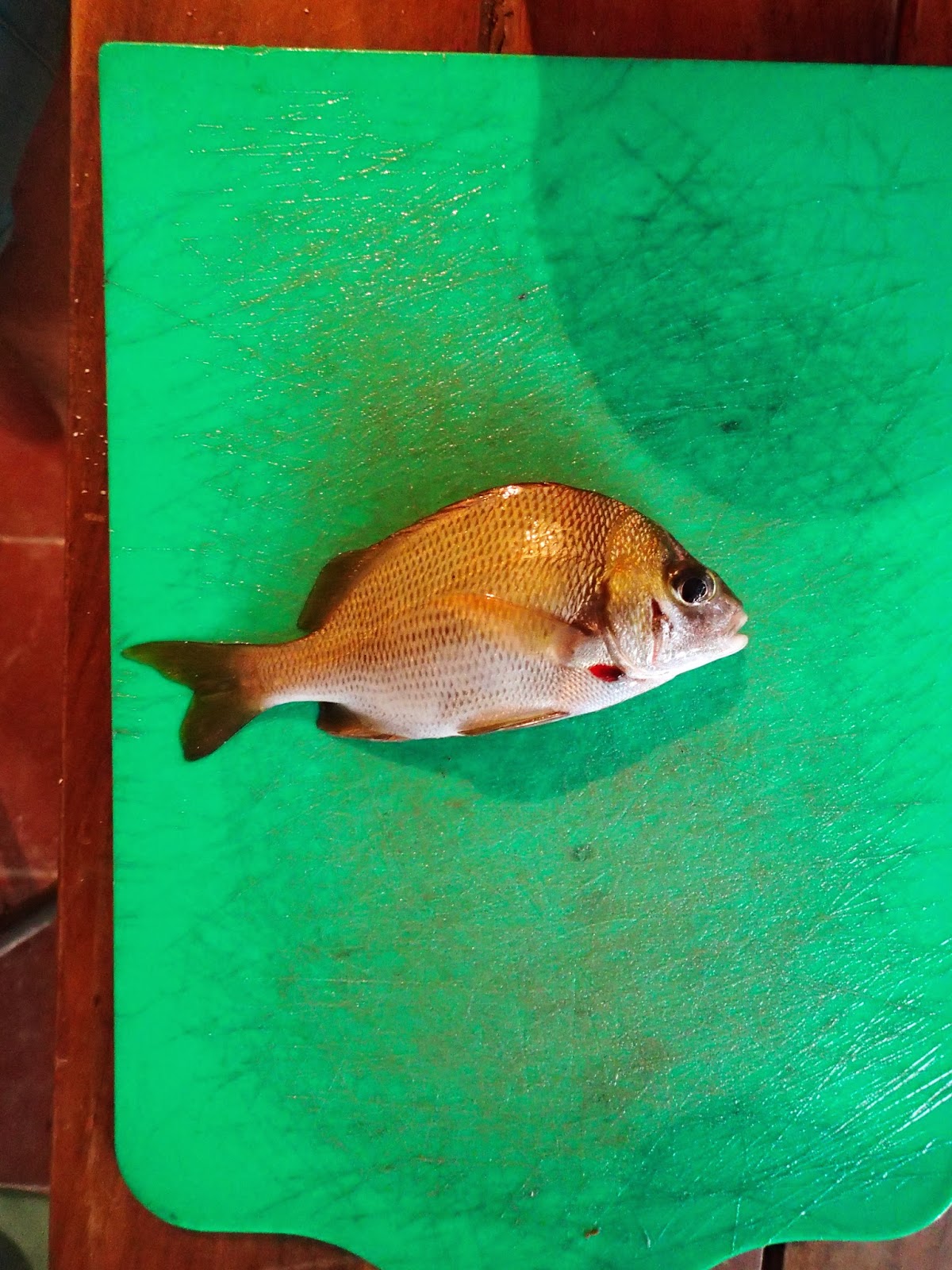
Stoked to have finally got some pescado
Catch-of-the-day
In times we lacked fresh pescado for dinner, which,
unfortunately, was more often than not, we’d be able to rely on the food truck
that came twice a week. I would wake in the early morning to the sound of
‘papaya-piña-papas-pollo-banana…’ blaring from the speakers mounted on the pick-up
truck. Everybody would crowd around the truck and purchase whatever fruits,
vegetables and chicken they desired. No matter how many pineapples, papayas,
bananas, chickens and vegetables I bought, it was difficult to get the cost
over 100 córdobas ($4 US).
In the evenings we would start a bonfire on which we cooked
our dinners. We’d put on some tunes, have some drinks that we purchased from
Juanita’s Kitchen next door and start grilling. We had it down to a science –
when to put in the potatoes, how to grill the chicken to perfection and even
how to make a strong cup of coffee out of the top of a plastic coca-cola
bottle. It was always a blast having everyone come over to cook and enjoy the
beach bonfire.
Another night at Castaway
Beach bonfire grilling
Finished product
Coca-cola bottle -filtered coffee
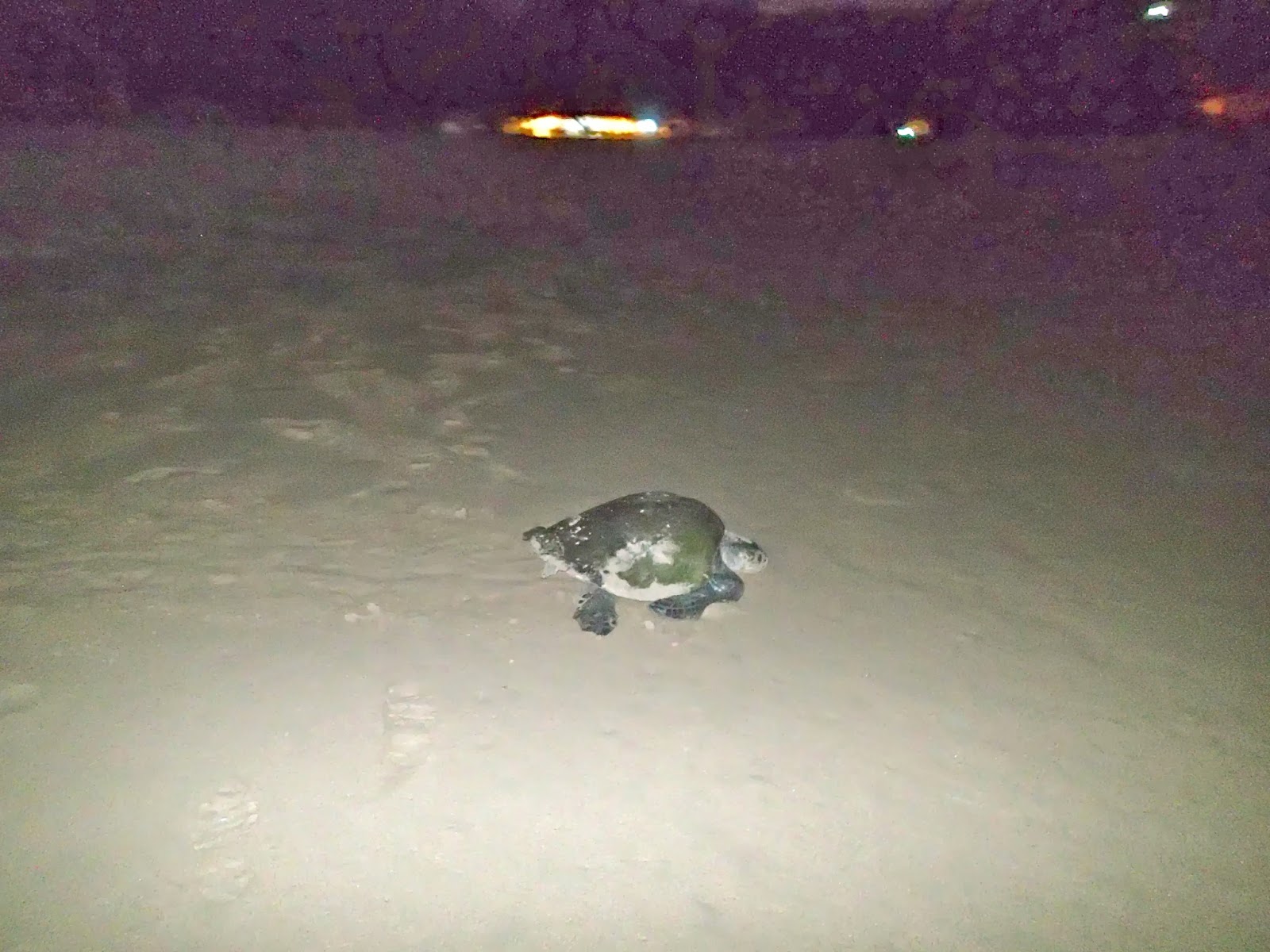
Every once in a while I would wake late in the night or early in the morning to help Douglas with the sea-turtles. Over the three weeks I got to see everything from fully-grown turtles climbing onto shore to the baby turtles making their way to the ocean.
Olive Ridley Sea Turtle
More baby Olive Ridley sea turtles
It was a blast, but it was also time to see what else Nicaragua has to offer. For the first time in two months I'll be leaving the beach and heading inland for some much needed rest from surfing.
Travelling foreign lands on your own has its advantages,
especially if you lack an itinerary. For one, it gives you the flexibility to
stay where you want, for as long as you want. This is precisely why I found
myself living on the Nicoya Peninsula in Costa Rica for five weeks; I was enjoying
the ‘pura vida’ lifestyle too much to leave. Unfortunately, I was way over
budget and, if I intended to make it to Patagonia, I had to change something
about the way I was living.
Nicaragua was the solution. The surf was world-renowned, the
country was less developed and, accordingly, the cost of living was lower. The
icing on the cake, however, was the accommodation. A fellow I met in Santa
Teresa, Ross, happened to be house-sitting a little place on the beach near San
Juan del Sur in Nicaragua that he invited me to stay at free-of-charge.
Four of us, all from different countries, decided to leave
Costa Rica for Nicaragua on Sunday November 3rd, 2013. We woke
before day-break and scrambled to gather and pack our belongings for the six
o’clock bus out of Santa Teresa, which a power outage prevented us from doing
the night before. Two buses and a ferry later we arrived at the Nicaraguan
border. If there was any security, it was well hidden. We simply flashed our passports,
got it stamped, and paid a modest entry fee of $12 US. After some drama between
the cabbies over who got to take us and for how much, we hopped in a cab that
got us to San Juan del Sur just in time to catch the sunset.
Sunset in San Juan del Sur
As the trek to the beach house was supposedly fairly
precarious in the dark, we opted to spend the night in town where we could grab
a bite and celebrate our arrival in Nicaragua over a couple of drinks. It
quickly became apparent that Nicaragua was in fact less developed and substantially
cheaper than Costa Rica. The roads were, in general, in much worse condition
than those in Costa Rica. Very few people spoke English. And people were
smoking everywhere, inside restaurants, bars and stores. Fortunately for us,
Nicaragua is the home of Flor de Caña and one can buy a 1.75 litre bottle of
the rum for less than 500 córdobas ($20 US) or a mojito from the bar for 25
córdobas ($1 US).
After dinner we found our way toHostel Pacha Mama. To my
surprise, it was more a bar than a hostel. They had several private rooms and
one twelve-bed dorm that was open to the common area, pool and bar downstairs. Pacha
Mama’s was the last stop of ‘Sunday Funday’, a day-long pub crawl of over a
hundred borrachos. Needless to say we didn’t get much sleep that night. The
four of us were to leave town and head to the beach house in the morning, but we
lost the South African representative of our group to what must have been a
severe hangover, for its been several days now since she was supposed to meet
back up with us.
After catching a ride to Maderas in the bed of a pick-up
truck and a twenty minute walk along the beach, we arrived at 'Castaway'. It's a small, simple place right on the beach in between Playas Maderas and Majagual.
Shuttle to Playa Maderas
The beach hike to Castaway
Castaway Beach House
I believe I’ve found paradise. Three surf breaks are within
walking distance of Castaway, and one of these is just steps from the front door. Here we’re
the only ones surfing – no battling the crowds over waves. It's exactly how I imagined my surf trip. And, in the down-time, I’ll just read in one of the hammocks overlooking the ocean. I make fruit
smoothies for lunch, go spear-fishing to try and catch some supper, and, if
unsuccessful, stroll on over to Juanita’s Kitchen. Juanita’s is a small cabin
on the beach run by the friendliest locals. One can enjoy the special of the day
while watching the sun set over the shark-fin-shaped rock that jets out of the
Pacific Ocean for only 100 córdobas ($4 US).
Enjoying Hemingway's 'For Whom The Bell Tolls'
Getting ready to hunt some dinner
Sandal repair
One can occasionally see enormous turtles climb-up onto
shore to nest directly in front of the beach house. While the turtles lay a
large amount of eggs, only 2% of these will survive. Unfortunately, some locals make a living by
digging-up and selling these eggs, which puts these turtles at risk of
extinction. Some will even go so far as to cut open the 100 year-old turtles to
harvest their eggs. Luckily we have a local, Douglas, who protects these eggs by digging
them up and reburying them on his property, ensuring that they have a fair
chance to make it into the ocean when hatched.
Douglas the sea-turtle protector hard at work
I've been fortunate enough to have the opportunity to help Douglas on one of his rescue missions. I woke at 5am on Sunday November 18th to the sound of a shotgun and Robert standing outside my window telling me that two sea-turtles just nested outside our front-door. We dug-up two nests totalling 164 eggs and re-burried them elsewhere to prevent people from stealing and selling them. Afterward we stumbled across one lone baby sea-turtle trying to make it to shore, who we dubbed 'Scout'. We put him in a bucket of water and waited until dark to release him to prevent birds from catching him on his way to the ocean. This was truly an incredible experience.
Their new home for the next couple of months
Scout
To get an idea of what its like, read my pal Ross' blog post or watch his video that was made directly in front of Castaway!
Life here in Castaway is simple but good, very good. The isolation,
spear-fishing and fixing of my own sandals definitely makes me feel a little like Tom
Hanks in the film ‘Castaway’.