Showing posts with label pacific. Show all posts

Saturday, January 11, 2014

A Jurassic Park Hidden Amongst a Surfer's Paradise in Santa Catalina


“Think of the number of fish you have seen elsewhere and double it. Think about the size of the fish you have seen and double that as well. That sums up the promise of diving… Coiba.”

-       Diver Magazine, May 2005


When I began my journey three and a half months ago I had planned no more than to start in Costa Rica and head south, with hopes of ultimately reaching Patagonia. Everywhere I ventured was based on the recommendations of fellow travellers. And Santa Catalina was no exception. It was rumoured to have every type of break you can possibly imagine, including the best point break in all of Central America. I decided to spend my remaining days in Panama surfing here, but little did I know what would lie just twenty-two metres under my board...

Upon arriving to Santa Catalina late January 4th, 2014 I hitched a ride from a Panamanian man to where he claimed was the best spot in town, Hostal Surfer's Paradise. It was a quaint, family-run hostel perched on a cliff overlooking the Pacific Ocean. I pitched my tiny, single-man tent on a patch of grass under the shade of a palm tree at the edge of this cliff. In the evenings it gave me a front-row seat to the most gorgeous sunsets and, in the mornings, to Santa Catalina’s infamous point break, ‘La Punta’.


Stoked to discover that Santa Catalina has not one, but several fruit & vegetable trucks!
Crowd starting to gather at La Punta


La Punta was a challenge to get to: I cut-up my feet while getting into the water, had to negotiate numerous rocks and paddle 350 – 500 metres to get to the break. However, the beautiful, ‘A’-frame –shaped wave was well worth the hassle. Besides the fun wave, the water was crystal clear such that I could see the rocks just a few feet below my board as I surfed. Unfortunately, out of my time in Santa Catalina I only managed to get in four days of surfing due to a lack of swell. On the other hand, this also prompted me to make use of my new PADI certification and scuba dive, which proved to be a real adventure.


Santa Catalina (A) & Coiba National Park (B)


While I was well aware of the world-class surfing Santa Catalina had to offer, I had no idea that it was also a huge diving destination. Located in the Gulf of Chiriquí, Coiba National Park’s underwater topography was linked to that of the Coco and Galapagos Islands by way of the Cordillera mountain range. This means that all three spots provide habitat to many of the same species. Nevertheless, I was skeptical of the quality of diving here due to the poor visibility I experienced spear-fishing in the Pacific Ocean. But after several days with no surfing and lots of reading, I was itching to do something...

Scuba diving was the solution. After checking out every dive shop in town I decided to go with Scuba Coiba, the first to open in Santa Catalina. A group of us boarded the boat early in the morning and began the hour-long ride to Coiba National Park. Within minutes I saw dolphins jumping straight-up and completely out of the water as if putting on a show for us in an aquarium. The closer we got to the national park the more and more it seemed we were going back in time to the Jurassic era. There was not a sign of human life among the numerous, densely forested islands. The water was clear and ranged from shades of turquoise to baby blue. Before long we dropped anchor at our first dive site, ‘Iglesia’.


Iglesia dive site

Hasta luego


Diving at Iglesia was a wild experience. The thermoclines here were incredible. I could see a clear line where there was a significant and sudden drop in temperature by what felt like 10ºC - on the cold side of this thermocline, one could see a mirage resembling the waves of heat rising from a barbeque. Furthermore, when we descended to twenty-two metres we were immediately at the mercy of the ocean current, just as in the movie Finding Nemo. I felt as if I were diving in the rapids of a river; we would establish neutral buoyancy and just let the current take us over the terrain, taking hold of rocks or ducking into eddies behind rocks if we wanted to pause to look at something a little more closely.


While there was no colourful reef as there was in the Caribbean, the animals here were bigger, more plentiful and more spectacular. The jacks, barracudas, and every other fish I saw was bigger than I thought possible. They often swam in schools of hundreds, creating the impression that they were even larger. Even the conches were of gigantic proportions. But there were also small creatures, such as seahorses that wrapped their tails around vegetation on the ocean floor as monkeys do around tree branches. But for me, the highlight was swimming with the white-tip reef sharks. I was definitely a little nervous at first, which may explain why I ran out of air in only 39 minutes as opposed to my 45-55 minute norm.


White-tip reef shark

School of mobula
Eel

Sea horse

Frogfish


After lunch we headed to our second dive spot, ‘Wahoo’. This spot is famous because of it’s saturation with algae and plankton which attracts giant mantarays, whale sharks and, depending on the time of year, whales. While we didn’t spot any of these on our dive, we were fortunate to witness a school of mobula fluttering near the surface of the water, several massive eels hiding between rocks and a frogfish chilling on the ocean floor.

While it was disappointing that I didn't get to witness the full potential of Santa Catalina's breaks, I am thankful for the small swell for it encouraged me to dive in Coiba National Park. Prior to this experience I was unaware of the variety of animals that roamed just metres under the surface of the ocean, and I must say that this revelation has piqued my interest in scuba diving.

Wednesday, January 1, 2014

Fam Jam in Pedasí

My 10 hour, cross-country bus ride from Bocas del Toro (A) to Panama City (B)


On December 23rd, 2013 my friends and I split in Bocas del Toro and headed our separate ways - Mark and Adrian left for Nicaragua, while I headed to Panama City to meet my family for Christmas. After ten hours in a freezing cold, air-conditioned bus, I arrived to the big city only to discover that my family's flight was cancelled due to an ice storm and it was unlikely that they would be able to make it out to visit me. This was disappointing at first, but then I realized that I would at least get to enjoy the luxurious accommodations they had booked.

The 'new' Panama City
The 'old' Panama City, i.e. Casco Viejo

Panama Canal
Miraflores Locks of the Panama Canal

My luxurious room in Riu Plaza Hotel


The Riu Plaza Hotel was located right in the heart of Panama City, and was a real treat after three months of travelling on a tight budget. Here I took my first hot shower in months, watched satellite television, and slept in a real bed rather than in a hammock or on the ground. While this was great, after a few days I was keen to get back to the beach. Fortunately, my family managed to find a way to get to Panama City just in time to join me!


Sibling love


My family and I loaded up our rental car and set out for Pedasí on December 26th. Driving through Panama was a new experience for me, and presented a host of challenges that I was not yet accustomed to; ensuring that I was getting on the correct bus was the typical obstacle for me when travelling from place to place but, when driving, it was the lack of signage on the roads. Google maps were useless in Panama, especially in the rural parts, as there were no road signs. Furthermore, even road maps were difficult to use as the towns rarely advertised their names. We would have to repeatedly stop and ask the locals for directions. This is where I came in handy - my Spanish had finally gotten to the point where I could hold a basic conversation, which my parents took advantage of throughout their visit.


View of the rolling hills on the way to Playa Venao

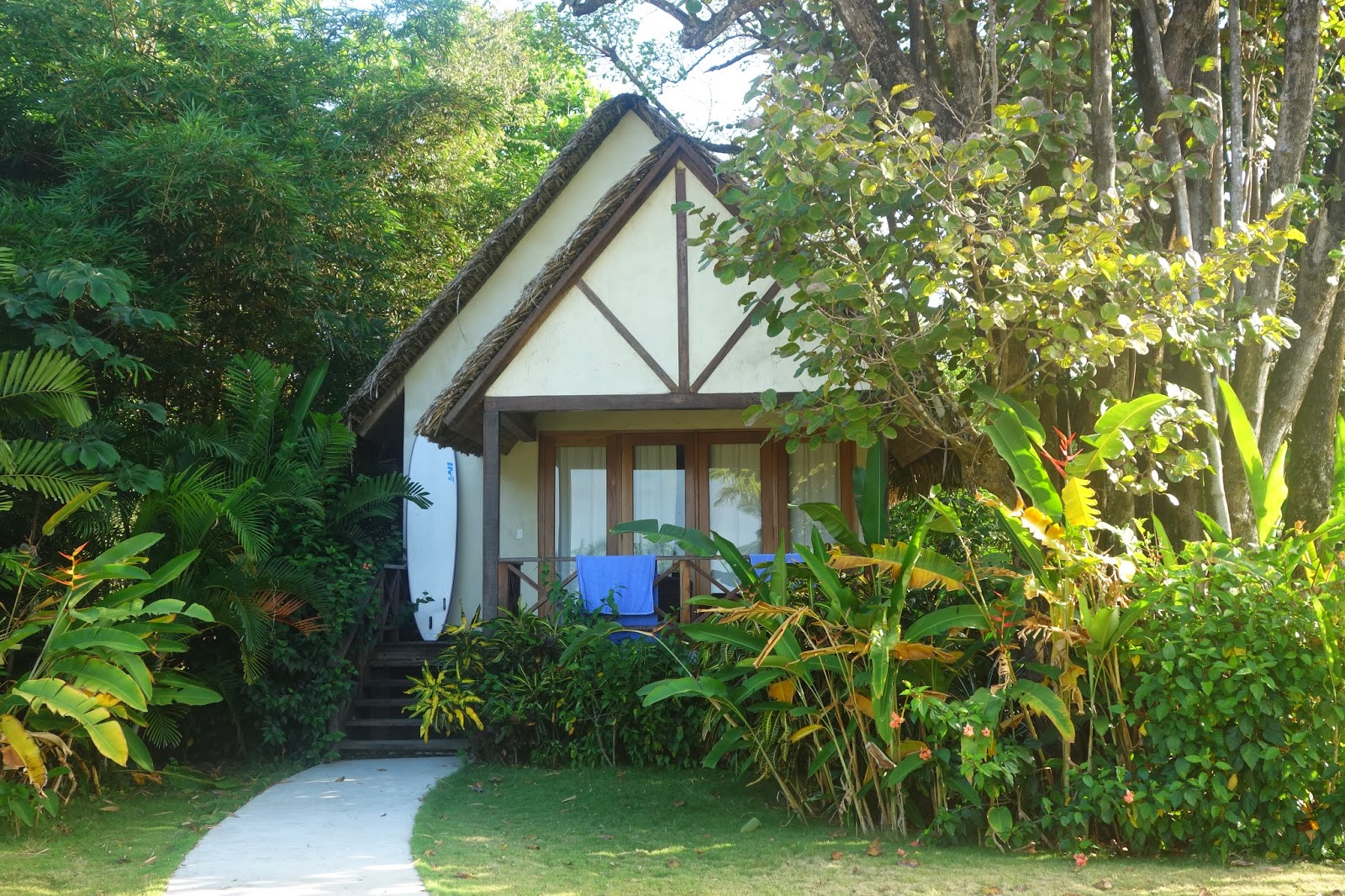
Several detours and six hours later, we arrived to Playa Venao Hotel Resort. The hotel was right on the beach, on the tip of the Azuero Peninsula. It had beautiful thatch-roof huts tucked into the jungle and an infinity pool overlooking the Pacific Ocean. Playa Venao was the liveliest beach I've yet to see in Central America. The beach was covered with people 'sun-baking' and the water was filled with surfers, body-boarders, and SUPs. On New Year's, beach-goers were entertained by a DJ from Ibiza and skydivers.


NYE Entertainment

I was also fortunate to be able to spend my birthday with mi familia in Panama. I spent the day surfing under the sun, which is pretty atypical for a December baby from Canada! 


The boys of the family waiting for the set to roll in


Proof that I do go right for all the non-believers
Surprised to find a birthday wish written in the sand on my way out of the surf

Birthday dinner with the family

Due to the flight fiasco, my family was forced to find another place to stay for the last few nights of their visit. In search of a vacancy during peak season, I was dragged from hotel to hotel by my folks for translating purposes, while my siblings got to enjoy the day at the beach. This was a drag at first, but at least I got to see more of the country and some wildlife too.

Pelican on the hunt

Crab

Parrot
This little guy managed to get tangled in my hair

Shocked to see an Emu, looked very Jurassic Park-ish

After hours of searching, we found a place to stay at Posada Los Destiladeros. It consisted of a number of cabinas amongst the forest overlooking the beach. The accommodation was very rustic, with the chairs, countertops and sinks and even bath tubs made from wood. The beach was beautiful - sandy and less populated than Playa Venao - and great for swimming or just relaxing.


It was great to see my family for my birthday and New Year's, but I am excited to tent-it on the beach and get back to the simple life that accompanies it!

Friday, December 6, 2013

Gringos in Aserradores


“There ain’t shit going on in this town… but I’m glad I got to experience the real Nicaragua.”


Before I set off for my journey I had the naïve illusion of myself being the lone gringo amongst the locals, conversing in Spanish and being invited to take part in their customs and traditions. Upon arrival to Central America, however, it quickly became apparent that this would not be the case; many towns, especially surf towns, were geared toward tourism. It was in the small fishing town of Aserradores that I had come closest to realizing this dream.


Aserradores (A) was in the middle of nowhere, it was tough getting anyone to take us further than Chinandega

Encountered this a few times during the drive into Aserradores


Aserradores was just about as far North as one can get on the Pacific coast of Nicaragua. It was the logical stop after Granada because it had surf breaks, would allow me to see a completely different area of the country and was along the way to Honduras, where several friends of mine were destined. After much difficulty arranging for private transport, we arrived in Aserradores in the afternoon of November 29th, 2013. The fact that no one was eager to drive us there should have been an indication of how far off the beaten track we were straying.

Aserradores was a tiny village situated by an estuary of the Pacific Ocean. The nets hanging outside nearly every home attested to the vibrant fishing industry in the community. There were no grocery stores, restaurants, or large hotels. Several homes doubled as pulperias from which people could buy sweets, pop and, occasionally, fresh vegetables and meat. We stayed about a forty-five minute walk outside of this small village, not on the beach, but in a cabin alongside the farms on the outskirts of town.


Aserradores

Fishing nets were being mended or hung-out to dry outside nearly every home
The cabin and campsite

Cooking up some grub


The cabin was in the far back corner of a long, narrow property. It was a small, wooden cabin equipped with a propane stove, basic electricity but no fridge, and an outhouse. While Ross and Kate stayed in the cabin, Tom, Jaylynn and I elected to camp outside by the orange and lime trees that were ready for the picking. Every morning I would wake in my tent to the sound of horses, pigs and chickens grazing in the field.


Just a typical morning

Babe

Cool bird


Aserradores is home to one of Nicaragua’s most famous breaks, ‘The Boom’. It is a steep beach break that causes the swell to jack-up at the last minute creating incredibly fast and hollow waves that dump no more than several feet from shore, in only a couple feet of water. Accordingly, many boards break here and it is expected of surfers to bring a quiver of sticks. Unfortunately, there was absolutely no swell that rolled in and no surfing to be had. While I came for the surfing, I got something completely different out of my time there.

I felt as if it was my first authentic cultural experience in Latin America. While one would expect for one of Nicaragua’s top breaks to spur development and attract tourists, this was clearly not the case in Aserradores – at least, it has yet to happen. There were a couple of all-inclusive surf resorts along the coast, but only one hostel in town run by a Portugese-American named Joe. The first piece of evidence that this area was seldom travelled occurred one day on the black-sanded beach of Aposentillo when a family of over half-a-dozen asked us if they could take a picture with us, the gringos.


Playa Aposentillo

Black sand


There was poverty in Aserradores, and its residents clearly led a different life than that which we are used to in the Western world. The houses were made of wood and tin and, in places, openings were patched with cardboard boxes. A common sight was seeing a whole family packed on a single motorcycle, with the infants squeezed between the adults on the seat and the older children on the gas tank and handlebar. Of course, none wore a helmet. From 7:00 to 12:00 the children were in school, all in the same class no matter the age. Here they studied every subject that children do in our schools, except for English. This may have been due to the lack of an English-speaking teacher, as I did not meet a single local who spoke the language.


Ross hard-at-work with the coconuts

Tom snacking on some coconut meat

First harvest provided plenty for snacking and home-made orange juice for screwdrivers


Despite the poverty, the locals were the kindest and friendliest people. I’d have to greet every person I passed on the street and, occasionally, attempt to carry out a conversation with them. The neighbouring children were understandably the most curious with us gringos and spent most of their free time at our cabin. They taught us how to gather oranges from the thorny trees and entertained us with their fire-crackers made of gunpowder wrapped in newspaper. My photos of the snow-covered mountains of Western Canada amazed them, and they were thoroughly entertained by my digital camera, with which they ran around taking countless pictures of anything and everything. They also found it particularly funny to watch me practicing Spanish with some audio tapes.


Neighbourhood kids laughing at my Spanish lesson

A couple of the local kids


In addition to getting a taste of rural Nicaragua, I experienced a phenomenon that I reckon only few have had the opportunity of doing, skinny-dipping in the Pacific Ocean with bioluminescent algae.  As you can imagine with no surfing to be had, we had lots of downtime in our rurally-situated cabin. One evening, several drinks deep, we all decided it’d be a good idea to trek to Playa Aposentillo for a swim. As we swam in the Pacific under the clear, star-spattered skies we noticed countless yellow/green –coloured lights trailing our movements – bioluminescent algae. Supposedly once a year the deep, cold water of the Pacific Ocean ascends to the surface, carrying with it this bioluminescent algae. When looking at the ocean it was completely black, but any of our movements caused the algae to fluoresce. It seems that alcohol doesn’t always lead to bad decisions, for if it wasn’t for our Coke con ron we would’ve surely missed this opportunity.

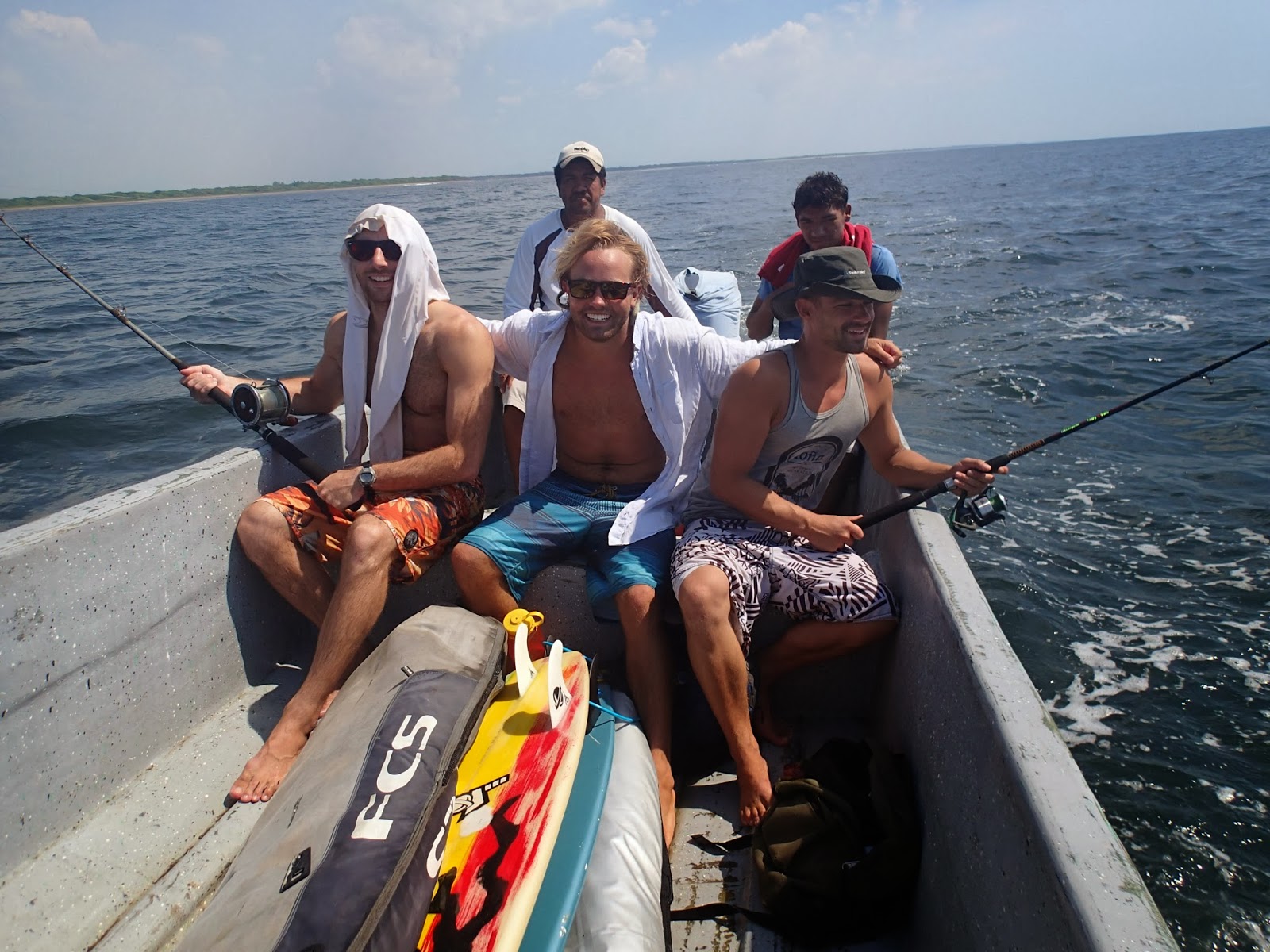
Our last day in Aserradores did not disappoint either. In fact, it surpassed all of our expectations. One evening at Joe’s place, the only hostel in town, Joe noticed that we were a little down about the waves and suggested we check out Maderas Negras, a river-mouth break that pumps out waves when neither the ‘Point’ or the ‘Boom’  are working. A couple of days later, on our last day, we woke in the early morning, strolled into town and hopped in a boat headed for Maderas Negras. We dropped a couple of fishing lines and trolled along the way. About fifteen minutes in, Tom managed to hook and reel in a large mackerel. Ten minutes later we were anchored behind the break and getting ready to surf.


Ross fishing on the way to Maderas Negras

Kate and Tom with the catch-of-the-day, holy mackerel


Approaching an unfamiliar break from behind was a wild experience. I did not know the size of the waves nor their shape. As I paddled closer I had to keep checking over my shoulder to see if anything was building up behind me. The waves were clean, breaking well both right and left. I had a fantastic session and surfed until I was completely exhausted, which was not such a bright idea. Normally if I were tired I could just surf on into shore and call it a day. I failed to remember that once done, I had to paddle out past the break to get back to the boat. Already dead tired paddling toward the boat, I saw the perfect wave building just in front of me and I couldn’t resist turning around and catching a final ride. I road it into shore and, satisfied with the surf session, started paddling back out toward the boat. It was the worst paddle I’ve ever had to do. I didn’t have an ounce of energy left, my arms felt like noodles and I was hardly covering any distance between the crashing waves. About twenty minutes later I made it back to the boat exhausted, but thrilled about the session and the fresh pescado we would be having for dinner – and, pardon the pun, but holy mackerel was it ever good.


Anxiously waxing our boards for the first surf in nearly two weeks

Approaching the break from the back

All stoked about the surf session and fresh pescado we'd be having for dinner

Filleting Tom's mackerel

Melody frying up some sweet plantains for dessert


While I was a little disappointed at first when I arrived to Aserradores and there was no swell, I can’t express how grateful I am that we found this little cabin. Truly interacting with the locals in rural Nicaragua, skinny-dipping with bioluminescent algae and a boat trip to surf Maderas Negras were not expected from Aserradores, but I’m stoked to have been able to share these experiences with Ross, Tom, Kate and Jaylynn. We split in Chinandega and all head our separate ways, but hopefully we’ll cross paths in the future. Next week I’ll be back in Costa Rica, meeting up with mis amigos Mark and Tarapacky from back home!

Pura Vida

Blogging time

Tom, Jaylinn, Kate and Ross